Seasonal layoffs are real in parts of the green industry — but not everywhere. Here's how to find out before you accept a job whether your paycheck survives winter.
If you're coming from another industry, there's a good chance you've heard some version of this: "Landscaping? Isn't that just a summer job?"
It's a fair question, and it's one a lot of job seekers quietly worry about but don't always ask out loud. The honest answer is: it depends entirely on the employer. Some green industry companies do lay off crews when the season ends. Others keep people working through the winter in some capacity. Some run true year-round operations. The title on the job posting won't tell you which one you're looking at — but a few good questions in the interview will.
Why "seasonal" isn't one thing
It's easy to assume every landscaping or lawn care job follows the same pattern — busy from spring through fall, then nothing until the grass starts growing again. In reality, there's a wide range:
- Fully seasonal. Crews are laid off when the season winds down and rehired in spring. Some companies handle this well, with clear communication and rehire priority. Others don't.
- Partially bridged. The company keeps part of the crew on through winter for shop work, equipment maintenance, or off-season projects, even if it's not full hours for everyone.
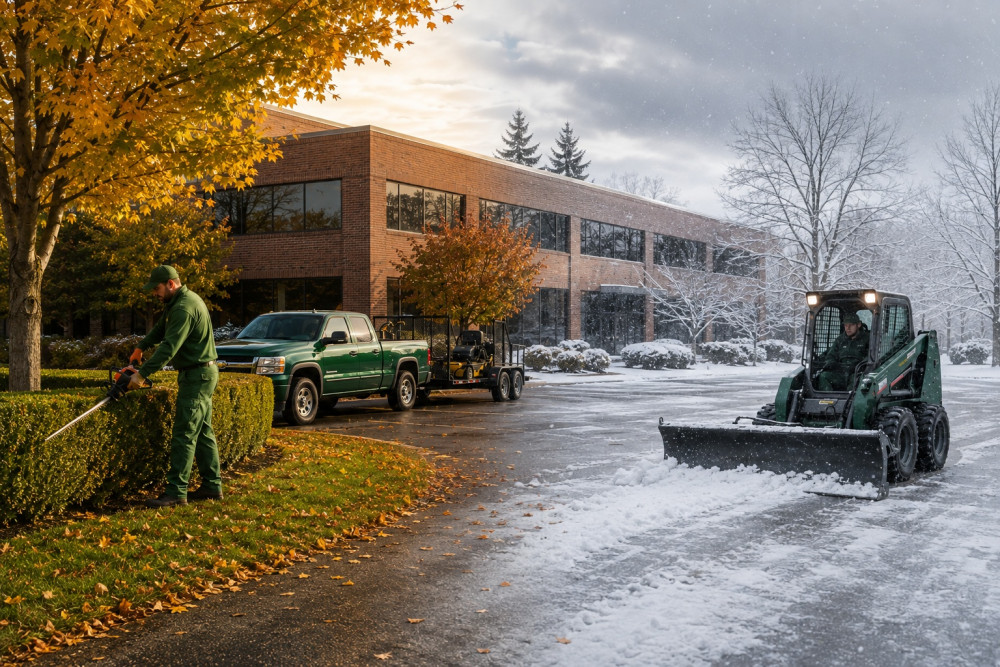
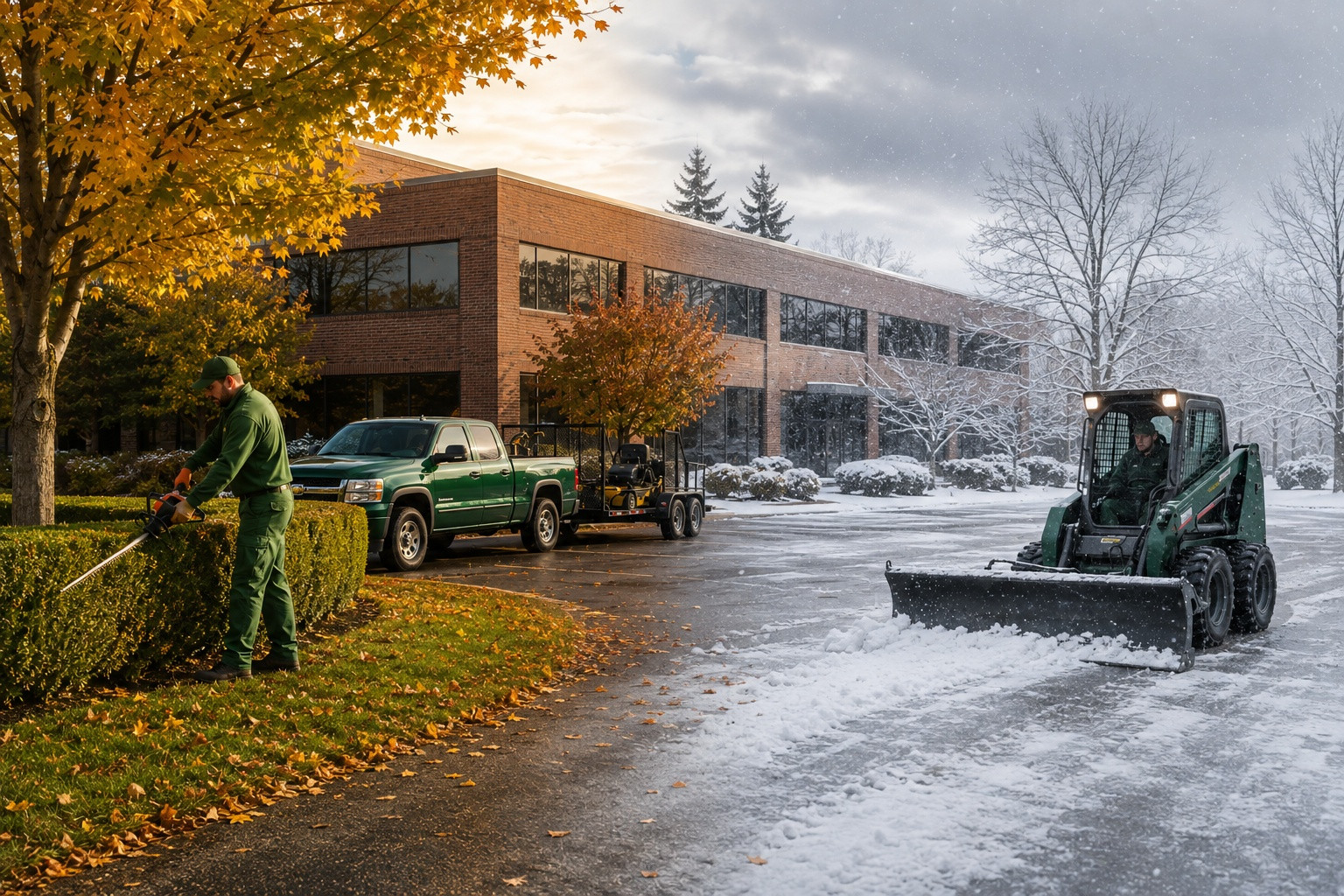
- Year-round through diversification. Companies that also do snow and ice management, holiday lighting, dormant pruning, or other winter services can often keep crews working close to full-time, all year. Some companies take snow and ice management very seriously as its own business line, while others use it more to supplement winter work.
None of these is automatically the "right" or "wrong" kind of employer — a seasonal role can still be a great job if you know what you're signing up for. The problem isn't seasonal work itself. It's finding out about the gap after you've already accepted the offer.
What to ask before you accept
You don't have to guess. These are fair, reasonable questions to ask in an interview — and how an employer answers them tells you almost as much as the answer itself:
- Is pay seasonal, or is there some kind of guaranteed minimum through the winter months?
- What off-season work is actually available — shop work, equipment prep, training, cross-training into another part of the business?
- If the company does snow and ice management, is that steady contract work, or only paid out when it snows? That distinction matters a lot for how predictable your winter paycheck actually is.
- Will they walk you through this clearly, or does the answer feel vague?
Asking these questions isn't a red flag on your end — it's exactly the kind of thing a serious candidate should want to know, and a well-run company should be ready to answer.
Reading between the lines
The answer you get matters, but so does how you get it.
An employer who can speak specifically about what winter looks like — even if the honest answer is "we can guarantee eight weeks of shop work, and after that it depends on projects" — is telling you something good. They've thought about it. They have a plan, even if it's not a perfect one.
An employer who brushes off the question with something like "don't worry about it, it usually works out" is telling you something too. Maybe it genuinely does work out most years. But vague reassurance isn't the same as a plan, and it's worth noticing the difference before you're the one hoping it works out.
An honest answer, even if the scenario isn't ideal, is often a better sign than a vague, comfortable one.
If winter work isn't guaranteed
Sometimes the right job for you is a seasonal one anyway — maybe the pay, the crew, or the career path outweighs the winter gap. If that's the case, a few things can help you plan around it instead of getting caught off guard:
- Budget for the gap in advance. If you know layoffs typically run from, say, December through February, plan your finances around that instead of finding out the hard way.
- Ask about rehire priority. Many seasonal employers bring back the same people each spring. Confirm whether that's the case, and what it takes to be first in line.
- Look into unemployment eligibility in your state. Seasonal layoffs may qualify, depending on where you live and how the layoff is structured. It's worth a quick check with your state's unemployment office rather than assuming either way.
The bottom line
The goal isn't to talk yourself into a seasonal job — it's to know what you're actually walking into, so you can decide for yourself whether it works. For some people, a seasonal income gap is a dealbreaker, and that's a completely valid call. Green industry careers can absolutely offer year-round stability, but that depends on the employer, not the industry as a whole. A few direct questions in the interview can save you a rough surprise in November.