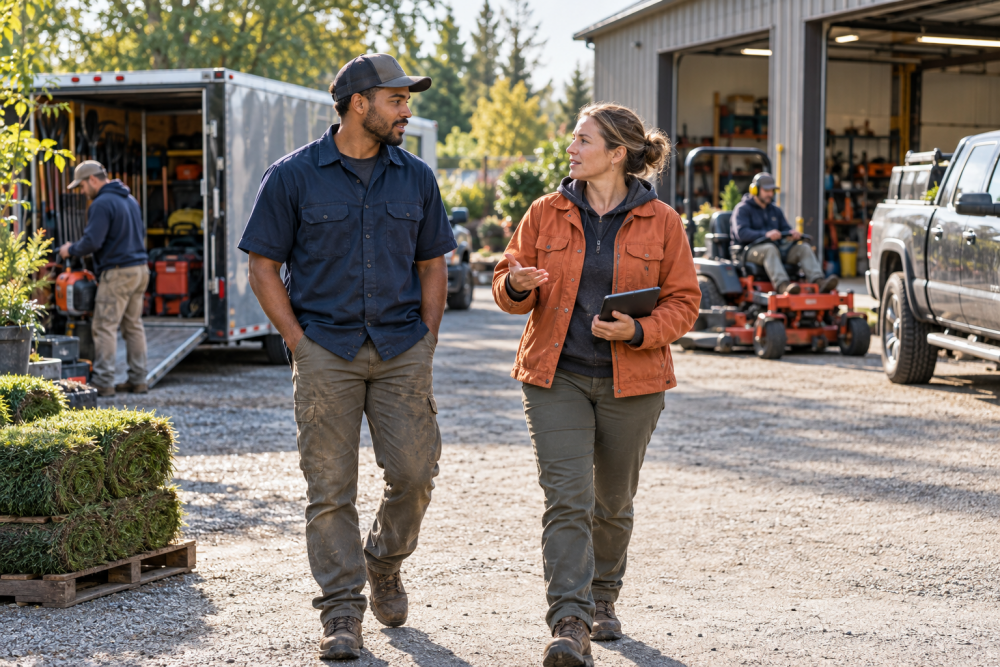
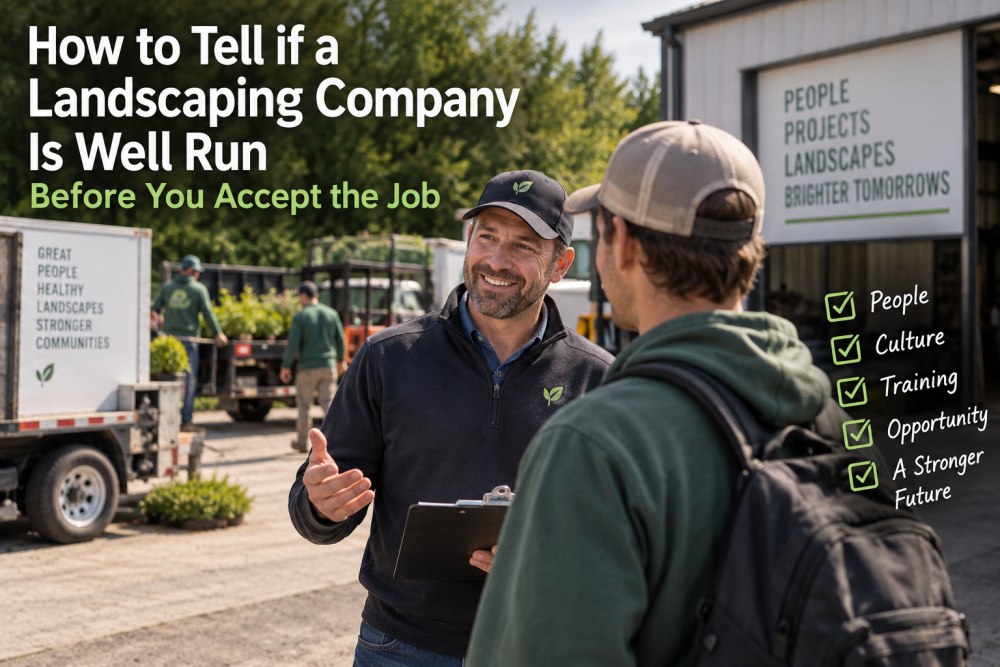
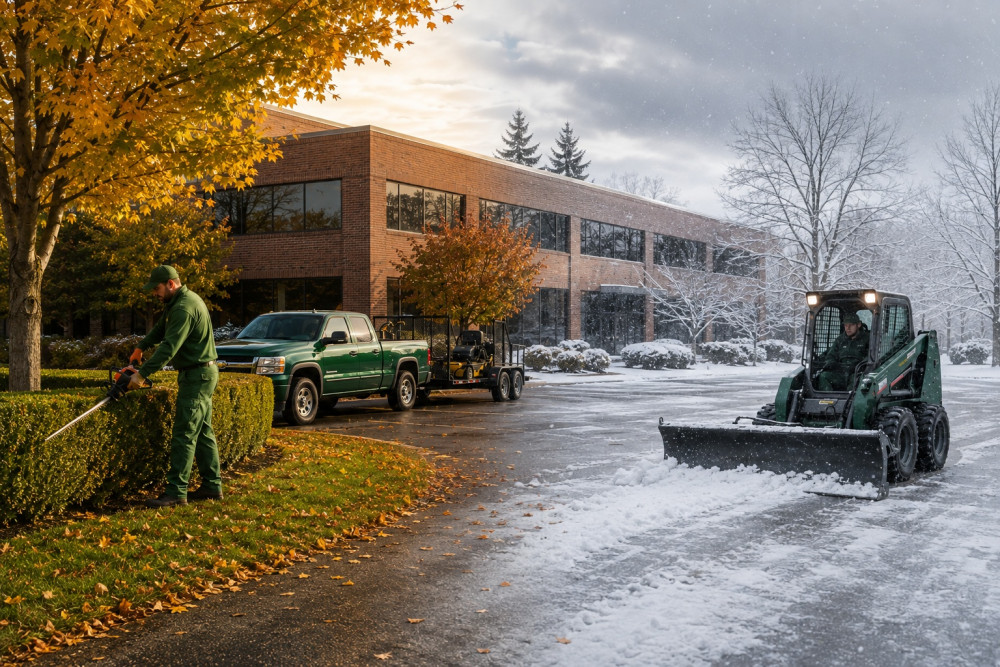
You heard it at the shop this morning, before the trucks rolled out. Or somebody in the yard asked if it was true that the company was selling. Maybe nobody has said a word yet, but you can feel it. A stranger walking the property in nice shoes. The owner's door shut more than usual. Talk spreading crew to crew.
Then the news lands. Your company got bought, or it's about to be, and the buyer is a private equity firm.
This is happening all over the green industry right now, and it is not slowing down. Private equity has been buying up landscaping, lawn care, irrigation, and tree care companies at a pace the people on the crew rarely see coming. If it hasn't reached your company yet, there's a good chance it will.
So what does it actually mean for you?
Most people react one of two ways, and both of them are guesses. Some assume the worst, dust off the resume, and start looking for the door before they know a single fact. Others wave it off, tell themselves nothing will really change, and go back to work. This decision is too important for either one. The smarter move is to understand where you actually stand, then decide on purpose. Let's walk through it.
You Are Part of What They Bought
Start with the thing nobody is going to sit you down and explain. When a private equity firm buys a landscaping company, they are not paying for the trucks or the logo. They are paying for recurring revenue, long-standing customer relationships, and crews that show up and do the work right. Every one of those things runs through people, and a lot of it runs through you.
The maintenance contract renews because a crew leader knows that property better than the client does. The customer stays because an account manager has been answering the phone for nine years. The reputation exists because the team built it one job at a time. That value does not live in a spreadsheet. It walks in the gate every morning.
Understand what that means for your position. The buyer needs the team to stay, and that is not a small thing. It is leverage, and you tend to have the most of it at the exact moment you feel like you have the least. That does not mean march into the office and make demands. It means don't panic, and don't undersell yourself. You are part of the asset, not a line on the expense sheet.
Don't Believe the Doom, and Don't Believe the Fairy Tale
There is a lot written about private equity, and most of it is built to scare you. Some of it is fair. A lot of it is lazy. Here is the honest version.
Private equity is not a villain, and it is not a savior. It is a buyer, and buyers vary. We have seen green industry companies become better places to work after a sale, with more room to grow, real career paths, and investment in training and equipment that a family owner could never have afforded. Those wins are real. We have also seen deals go the other way, where good people got squeezed and the culture they loved got stripped for parts. Those risks are real too, and pretending otherwise would be its own kind of garbage.
So don't swallow the doom automatically, and don't fall for the fairy tale either. Look at your specific situation and read the actual signals in front of you. Here is what belongs on each side of the scale.
The Real Risks
Cost cutting. Some buyers hunt for savings first. That can mean roles combined, routes tightened, benefits changed, or the culture that made the place feel like home getting squeezed to hit a margin target.
Distance. A local owner knew your name and your kids' names. A firm three states away runs on dashboards and quarterly targets. Decisions can start to feel like they come from people who have never walked your route or loaded a truck in the rain.
Turnover at the top. Owners often stay on for a year or two after the sale, then move on. The person you trusted and worked hard for may not be the one calling the shots eighteen months from now.
Promises that don't hold. "Nothing is going to change" is the most common thing said after a sale and the least often true. You want to know what's going to actually happen over the first few seasons, not what's getting announced in the first week.
The Real Upsides
Room to grow. Bigger companies have more rungs on the ladder. A crew leader can move up to foreman, a foreman to account manager or branch manager, a branch manager to running a whole region. That path often did not exist under a single owner who was never going to expand.
How to move from crew member to management.
Investment. New equipment, better technology, real training budgets, and certifications paid for. A lot of these companies finally do the things a small operator wanted to do for years but never had the cash for.
Real structure. Actual HR, clearer pay bands, defined roles, and benefits a family shop often cannot match. For plenty of people that is a genuine upgrade, not a loss.
Stability. A well-run, well-capitalized parent company can be a steadier place to build a career than a business that rose and fell on one owner's decisions and one owner's health.
The point is not that private equity is good or bad. It depends entirely on the buyer, and you are allowed to find out which kind you are dealing with before you decide anything.
How to Read the Buyer
You do not have to guess. You just have to pay attention.
Listen to how the new ownership talks about the team. If they describe the people as the reason they bought the company, that is a good sign. If they are already talking about headcount and cost before they have even closed, believe them. How a buyer talks about the crew before the deal is usually how they treat the crew after it.
Watch what happens to the people who leave and the people who stay. Who gets promoted. Who gets pushed out. Who they scramble to keep. The pattern will tell you more than any all-hands meeting ever will.
Bottom line, judge the new owners by what they do, not by what they promise.
Questions Worth Asking
You are allowed to ask questions about your own future, and good employers respect the people who do. When the timing is right, get clear answers on the things that actually shape your job: what your role looks like going forward and who you will report to, what the plan is for your crew or your branch, how pay and overtime and advancement work under the new structure, and what the company wants to look like in a couple of years and where you fit in it.
If the answers come back clear and honest, that tells you something good. If nobody will give you a straight answer, that tells you something too.
Then Decide on Purpose
When private equity comes in, you have three honest paths. The first is to decide this is not something you want to be part of and make your move, on your own terms, to a company that fits you better. That is a completely acceptable call. Just be careful not to jump the gun and walk away from a real opportunity before you have given it a fair look.
The second is to stay, dig in, and give the new chapter real effort and an open mind, while keeping your head on a swivel for where the direction is actually heading. Commit to the work, but pay attention to what the owners show you about who they are.
The third is to stay for the long haul, and this one is not really a day-one choice. It is where the second path leads when the new owners prove out, treat the team right, and open doors that were not there before.
Any of those can be the right call. What matters is that you choose on purpose, with real information, instead of reacting out of fear or wishful thinking. Do not panic-quit over a rumor. Do not sleepwalk through a change this big either. Know your worth, ask your questions, read the buyer, and make a deliberate decision. That is how you stay in control of your own career no matter whose name ends up on the building.
And if you decide it is time to see what else is out there, look with those same clear eyes. The green industry is full of good companies, private-equity-backed and family-owned alike. Deciding to leave is only half the job. The other half is knowing how to weigh the next offer and where it can take your career.
Weighing your next move in landscaping, lawn care, irrigation, arboriculture, or horticulture? Browse current openings on Green Industry Careers.